
The minutes of the December MPC meet reveal members felt the current spike in the headline inflation rate was due to a temporary supply shock on the food front, expected to moderate by the second quarter of 2020-21.
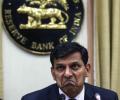
Will RBI chief have the final say, in the form of a veto

The Reserve Bank on Wednesday retained the GDP growth forecast at 9.5 per cent for the current fiscal but cautioned that the economic recovery is not yet strong enough to be self-sustaining and durable.

In the backdrop of an over four-decade high inflation, the US Federal Open Market Committee has raised its key policy interest rate by 75 basis points to 2.25-2.50 per cent, anticipating that the increase in the interest rates will be "appropriate". Hiking interest rates typically cool demand in the economy, thereby putting a brake on the inflation rate. The US Federal Reserve in its June meeting too raised the interest rate by 75 basis points, which was the steepest hike since 1994.

Retail inflation fell to a 15-month low of 5.66 per cent in March, mainly due to a decline in food prices, government data showed on Wednesday. The inflation figure in March is within the RBI's comfort zone as it is below 6 per cent. The retail inflation based on Consumer Price Index (CPI) was 6.44 per cent in February 2023 and 6.95 per cent in the year-ago period.

Probably 35 bps. There could be even an encore in February 2023 to take the policy rate to 6.5% before the financial year ends, predicts Tamal Bandyopadhyay.

It would be a good idea to create independent oversight committees for each regulatory institution and indeed, even for their appellate bodies, says A K Bhattacharya.

India's economic growth will be above 6 per cent in the current fiscal as the country has managed to strengthen its macroeconomic stability and performance even in a period of large global shocks, RBI Monetary Policy Committee (MPC) Member Ashima Goyal said on Monday. Goyal further said that a global slowdown reducing India's export growth, geopolitics fueling oil and food prices, and erratic weather are some of the continuing risks that the country faces. "India has managed to strengthen its macroeconomic stability and performance even in a period of large global shocks.

RBI targets to keep inflation at 4 per cent, (+/- 2 per cent), and its rise beyond this comfort zone will put pressure on the central bank to hike rates.

The Indian economy appears to have slowed down in 2018-19 due to lower private consumption, tepid growth in fixed investment and muted exports, a finance ministry report has said.

Tomorrow's review could also turn out be the last policy anchored by Rajan if the proposed Monetary Policy Committee (MPC) is put in place before the next review due on August 9.

'To the believers of crypto regulations, I have only one question to ask, how will you regulate it?'

RBI Governor Raghuram Rajan on Tuesday kept the repo rate unchanged 6.50 per cent.

Equities went into a tailspin on Wednesday after the Reserve Bank surprised the market with a mid-cycle rate hike in a bid to tame soaring inflation.

The criticism that the Reserve Bank of India was behind the curve in hiking interest rate to tame rising inflation is unfair, former RBI Governor D Subbarao said on Wednesday and asserted that it is difficult for any central bank to anticipate the future more accurately. Earlier this month, Monetary Policy Committee (MPC), the central bank's rate-setting panel, surprised the markets with a 40 basis points hike in repo rate in an off-cycle policy meeting. It was also the first rate hike after August 2018, amid spiralling inflation.

'Mrs Gandhi had nothing to do in the day-to-day working of Dr Singh's government.' 'People say Mrs Gandhi's office used to give orders, which is nonsense.'
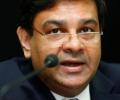
For July-September, it pegged CPI-based retail inflation at 4.2 per cent which it saw firming up to 4.8 per cent in the second half of the current fiscal.
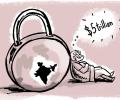
India decisively withstood global headwinds in 2023 and is likely to remain as the world's fastest-growing major economy on the back of growing demand, moderate inflation, stable interest rate regime and robust foreign exchange reserves. Despite widespread pessimism witnessed among the developed nations and the worsening geopolitical situation, India recorded a gross domestic product (GDP) expansion of 6.1 per cent in the March quarter. The growth moved up to 7.8 per cent in the June quarter and was 7.6 per cent in the September quarter. For the first six months of this fiscal, the growth was 7.7 per cent.
.jpg)
2014 made a lot of promises; can the new year deliver?
Reserve Bank Governor Raghuram Rajan on Thursday said the central bank will continue its focus on taming inflation, speeding up resolution of distressed projects and ensuring enough capital for banks through balance sheet clean-up.

In order to provide an impetus to digital funds movement, it has been decided to do away with the charges levied by the RBI for transactions processed in the RTGS and NEFT systems, RBI said.

'If rate cuts happen, bond yields will come down and investors will make mark-to-market capital gains on them.'
A likely easing in inflationary pressures in the forthcoming months will reopen the window for the RBI to once again prioritise growth and ease its interest rates.

Bond markets, global as well as domestic, are likely headed towards hard times over the next three to six months, as higher vegetable prices, rising fuel costs, and improved wages may keep inflation hot, believe analysts, who expect the yields to hit 7.5 per cent in the near-term from the current 7.234 per cent. In this backdrop, they suggest investors can put in money in funds/instruments with residual maturity of 4 to 6 years, while longer-term investors can allocate cautiously to the longer end in the range beyond 7 years.

The Reserve Bank on Friday retained the GDP forecast for the current financial year at 9.5 per cent and flagged global semiconductor shortages, elevated commodity prices and potential global financial market volatility as downside risks to economic growth. In his address after the three-day meeting of the rate-setting panel, RBI Governor Shaktikanta Das said recovery in aggregate demand gathered pace in August-September, and it is reflected in high-frequency indicators, like railway freight traffic; port cargo; cement production; electricity demand; e-way bills; GST and toll collections. "The ebbing of infections, together with improving consumer confidence, has been supporting private consumption," he said, and added the pent-up demand and the festival season should give further fillip to urban demand in the second half of the financial year.

Amendments to RBI Act likely soon

The repo rate has been left unchanged at 4 per cent, Governor Shaktikanta Das said while announcing the decisions taken by the central bank's MPC.
The Reserve Bank may be hitting the end of its tolerance for high inflation and will most likely hike interest rates in the first half of 2022, analysts said on Friday. The central bank will also start rolling back its accommodative policies which have led to easy liquidity conditions, they said. The view from analysts came even as inflation cooled down to 5.6 per cent for July, after two months of breaching the upper end of the RBI's tolerance band of 6 per cent.

The recovery in the Indian services sector was sustained in November as new work orders supported business activity growth and the first rise in employment in nine months, a monthly survey said on Thursday.

The Governor said the MPC had voted to maintain its accommodative stance, implying more rate cuts in the future if the need arises.
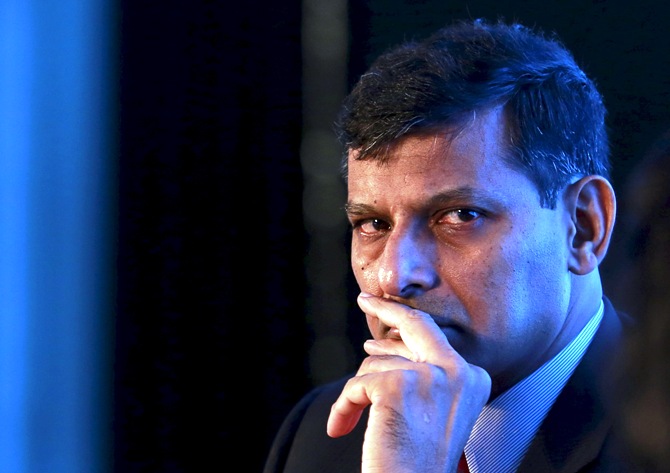
We need a change in mindset, says the RBI Governor.

Heading to the third year, will Urjit Patel be busy firefighting a currency crisis? Almost no governor of the RBI managed to evade it and Patel perhaps knows it.

Market breadth depicted gains with 1,476 advances over 1,403 declines on the BSE. 140 stocks remained unchanged.
Higher for longer' may be the narrative in the developed markets, but interest rates might not stay high for very long in India, with a section of the market expecting rate cuts to begin this year. The six-member Monetary Policy Committee of Reserve Bank of India (RBI) decided to keep interest rates unchanged at 6.5 per cent in the April review - after hiking the policy repo rate in six previous meetings. RBI Governor Shaktikanta Das emphasised that the pause was only for the April policy and that the central bank was ready to act if the situation demanded.

The finance ministry on Thursday raised concerns over the possible impact of El Nio conditions on India this year, saying if recent forecasts came true, the country could see lower agricultural output and higher inflation. "Some meteorological agencies predict the return of El Nio conditions in India this year. "If these predictions are accurate, then monsoon rains could be deficient, leading to lower agricultural output and higher prices," the ministry said in its monthly economic review.

The sector seems set for a rally that may be somewhat temporary.

The central bank had revised its inflation forecast significantly downward in the last policy
Chief Economic Advisor V Anantha Nageswaran on Thursday expressed hope that the economy will maintain the trend growth rate of 6.5 per cent and above for the rest of the years in the current decade. The economy will close the current fiscal logging in a growth of 6.5-7 per cent, he said, citing the projections of private sector analysts, Reserve Bank of India (RBI) and international agencies like OECD and the IMF. "This appears to be reasonable at this point in time although we will get the data on the fiscal second quarter in a few days, which will give more clarity on these numbers.

Concerned over elevated inflation, Reserve Bank of India on Friday decided to leave the benchmark interest rate unchanged at 4 per cent but maintained an accommodative stance, implying more rate cuts in the future if need arises to support the economy hit by the Covid-19 pandemic.

On one hand, Operation Greens should help to smoothen volatility in the prices of vegetables, whereas the proposal to enhance and extend minimum support prices to augment farmer incomes, may emerge as an inflation risk.
 © 2026 Rediff.com - Advertise with us - Disclaimer - Privacy Policy - Sitemap - Feedback - About us - Terms of use - Grievances